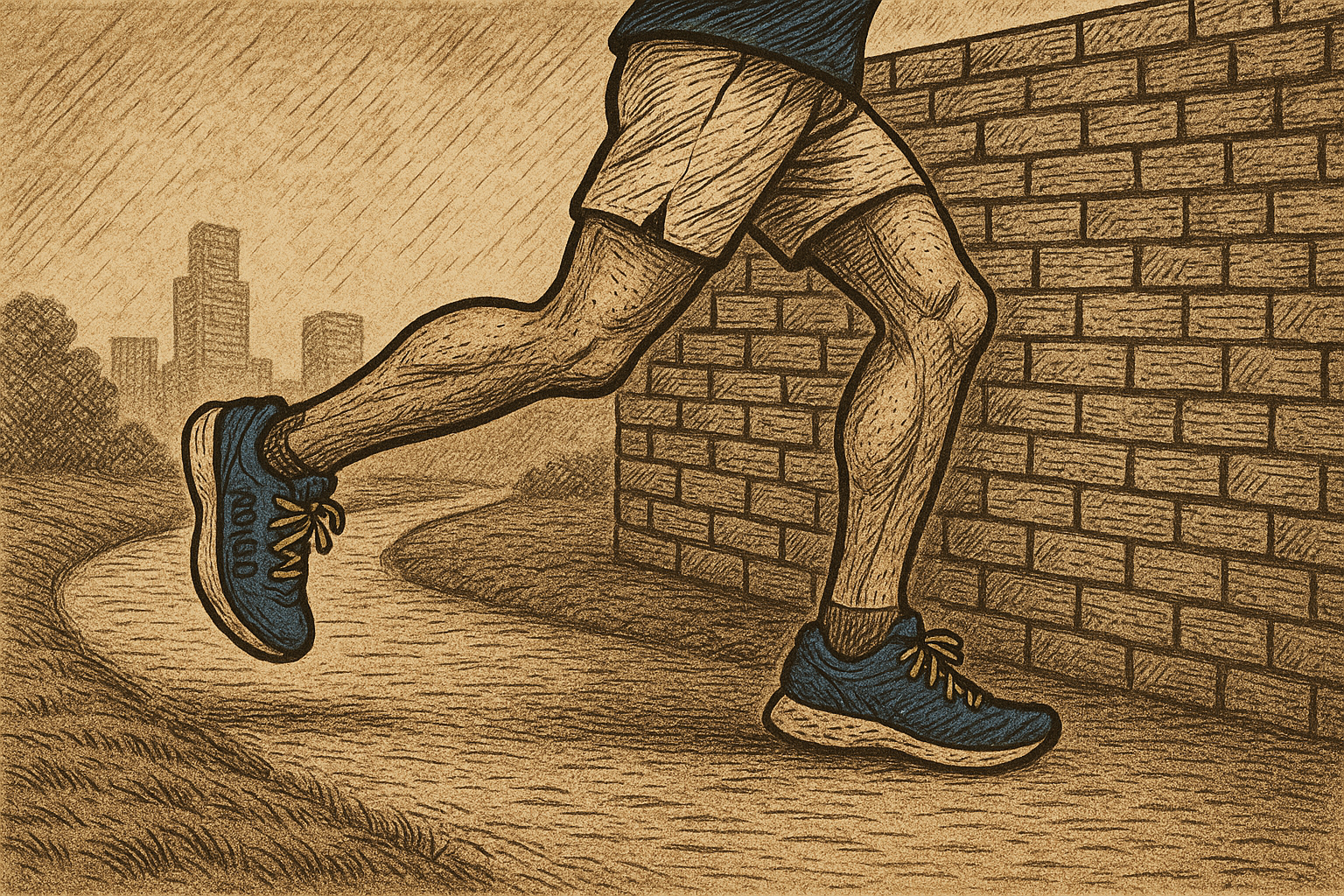
In the past, I used to “lose” either my legs or my lungs on a long run. Some days, my quads and calves would give out. Other days, it was my breathing and heart rate that betrayed me.
But recently something shifted. Now, around the two-mile mark, I feel both systems shutting down together. My heart rate spikes and won’t come back down, and at the same time, I feel soreness and weakness creeping into the outside of my hips.
Why Hip Soreness Shows Up
That tired, sore feeling on the outer hip often points to gluteus medius and tensor fasciae latae (TFL) fatigue. These small stabilizer muscles keep your stride balanced. When they give out, your form collapses and running feels harder everywhere.
Common causes:
- Weak stabilizers compared to larger running muscles (quads, hamstrings, glutes).
- Overstriding, which adds stress to the hips.
- Lack of targeted strength training.
Strengthening fixes:
- Clamshells
- Side-lying leg raises
- Banded lateral walks
- Single-leg deadlifts and step-ups
The Heart Rate Recovery Puzzle
Why does heart rate also become stubborn at the same time?
- Form breakdown: As hips fatigue, stride efficiency drops → heart rate climbs.
- Aerobic adaptation: Your cardiovascular system is still building its base fitness.
- Fueling gap: Running fasted (like early morning runs without food) can keep HR elevated longer.
Training tweaks that help:
- Add more easy base miles (focus on Zone 2 heart rate).
- Use walk-run intervals to keep HR manageable.
- Fuel before or early in the run with a small snack or drink.
Why Both Hit Together
This double wall isn’t just bad luck. It’s a sign of progress. Your fitness has developed to the point where both your stabilizers and your aerobic system are being stressed at once. In a way, it’s proof that you’re reaching a new level of running efficiency.
Action Plan for Runners
If you’re dealing with sore hips and a high heart rate at the same time, here’s the path forward:
- Strengthen your stabilizers: 10–15 minutes of hip and core stability work 2–3 times a week.
- Control your pace: Keep early miles easy, don’t rush into high heart rates.
- Experiment with fueling: Try a pre-run snack to support both muscles and cardio.
Running progress isn’t always smooth. Sometimes your body shows you multiple weak points at once. But if you lean into strengthening, pacing, and fueling, those “double failures” can turn into double wins.
Catch up on all my other post here.