
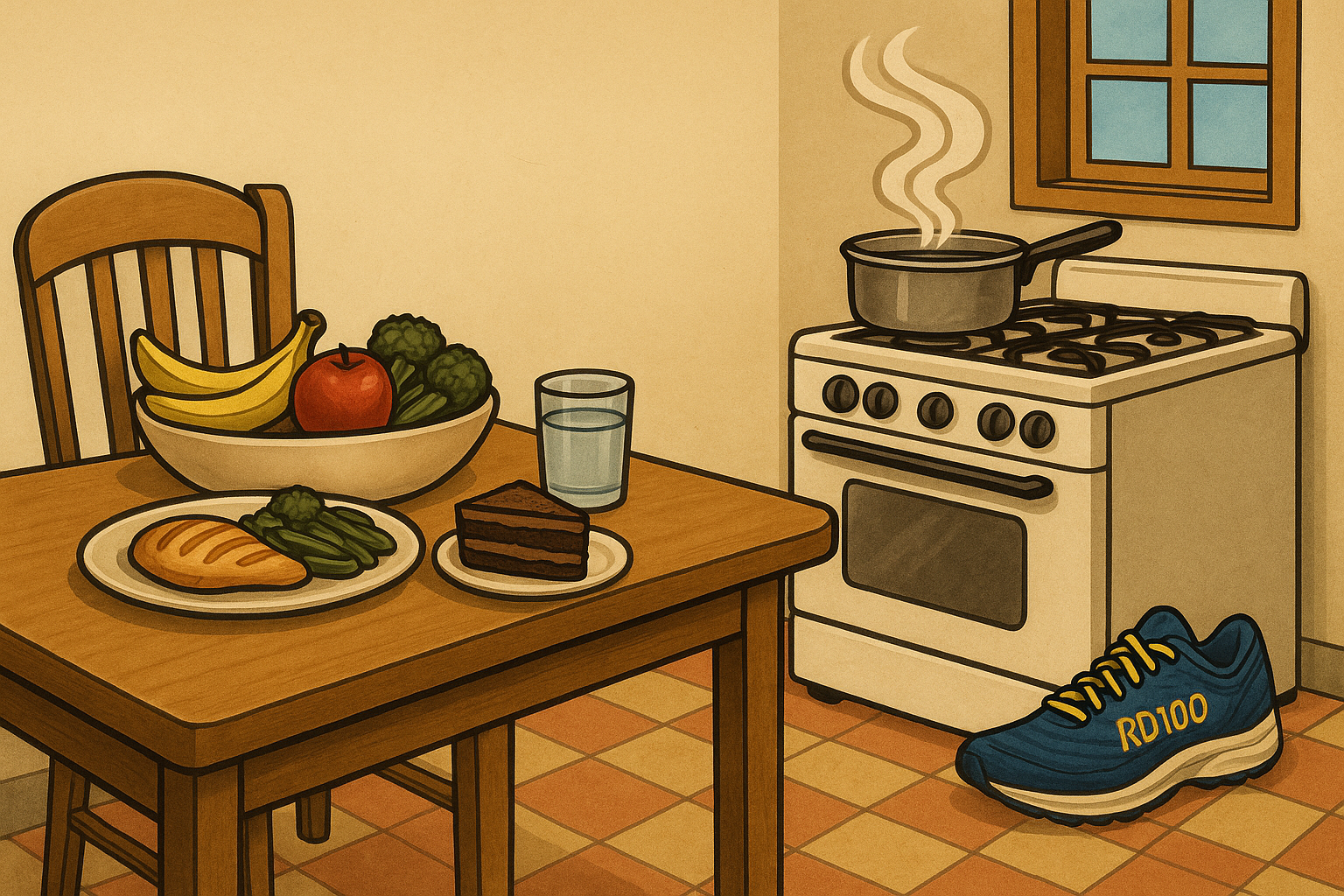
When I started this journey, I said I’d reexamine my diet. Over the past few weeks I’ve leaned heavily on intermittent fasting, and honestly, it’s worked well for me because it keeps my daily calories in check. But I’m also a breakfast person, and as I start running longer distances, I know I’ll need more frequent meals to fuel myself properly. That’s why I’m rethinking my diet this week and laying out what I want it to look like moving forward.
Everything in moderation, including moderation.
Oscar Wilde
Why I’m Changing Things
Intermittent fasting has helped me reset. But long-term, I don’t think it’s the whole answer. I want something sustainable for myself and realistic for my family.
I also don’t buy into the old “low fat everything” mindset. That idea actually goes back to the 1960s when researcher Ancel Keys pushed the theory that fat was the main cause of heart disease. Later investigations uncovered that the sugar industry paid Harvard scientists to publish research downplaying sugar’s risks and shifting the blame to fat. The result was decades of low-fat products where fat got replaced with sugar and refined carbs — fueling the rise of obesity and metabolic disease.
To me, the bigger issues are:
- The quality of meat (feedlot vs. grass-fed and organic).
- Sugar (added sugar sneaks into everything).
- Processed foods (fast and easy, but not how I want to live long-term).
On the flip side, I’m not a huge vegetable person, and my wife isn’t big on seafood. Add two kids into the mix, a busy schedule with sports and school, and you can see the challenge.
My Base Diet
Here’s the foundation I want to work from:
- Whole foods first: meat, veggies, rice, couscous, spices, herbs.
- Limit processed meals to one per week (for those “life happens” nights).
- Cut out added sugar (fruit and a little honey are fine).
- One dessert per week: Saturday night becomes our family dessert ritual. Everyone helps pick the recipe, we enjoy it together, and it becomes something to look forward to instead of sneaking treats midweek. Plus, I run on Sunday mornings—so at least I’ll feel like I’ve earned it.
- Keep it simple in the kitchen: At home, we mostly cook with stainless steel and cast iron. Nothing fancy—just a way to keep things straightforward and avoid any unnecessary extras sneaking into our food.
Issues to Resolve
- Bread & Buns
Bread is almost always processed. I don’t have time to bake fresh loaves, but sometimes you just need a bun (think leftover brisket). My solution: pick the best options I can find (like sprouted or bakery bread) and treat it as an occasional convenience, not a daily staple. - Vegetables
Eating steamed broccoli every night gets old quick. The plan: rotate how we cook them (roast, grill, stir-fry, soup) and borrow ideas from different cuisines—Mexican fajita veggies, Italian roasted zucchini, Asian garlic green beans. The key is variety and flavor, so they don’t feel like punishment food.
The Weekly Plan
To actually make this work, I need to think ahead:
- Look at the calendar each weekend: sports nights, board meetings, busy work days.
- Sunday Prep: cook proteins, prep rice/couscous, wash/chop veggies.
- +1 Backup Meal: always have an extra prepped meal in case the week gets crazy.
- Freezer Rescue Meals: things like chili or casseroles we can pull out on the busiest nights.
This way, even when life gets chaotic, we’re not defaulting to fast food.
Calories & Portion Control
I don’t want to live by calorie counting. I think the bigger key for me is portion control and slowing down. That’s where some of my past experience with the “French Diet” comes in—slower meals, smaller portions, and making food something to enjoy instead of rush through. Those slow meals won’t always jive with my schedule, but it’s about doing it when I can.
I also want to use satiety foods to keep me full between meals: cheese, nuts, avocado, even a square of dark chocolate. Higher fat, but satisfying, and better than binging when hunger gets out of hand.
Food for Thought: Documentaries That Changed How I See Food
Part of why I’m motivated to rethink my diet is from watching some eye-opening documentaries. If you’re curious, here are a few I recommend:
- The Biggest Little Farm – A family builds a farm using traditional methods, showing how natural cycles can work in harmony.
- Food Inc. & Food Inc. 2– A tough but important look at the American food system and how it shapes what we eat.
- In Defense of Food – Michael Pollan breaks down the modern American diet and offers a simpler philosophy: Eat food, not too much, mostly plants. Michael also has two books on food that I highly recommend, Omnivore’s Dilemma and In Defense of Food(the book the documentary is based on). He’s a very good writer and has books on other subjects as well.
- King Corn – A fascinating look at how corn dominates American agriculture and what that means for our food.
- Fresh – Fresh explores America’s broken food system while spotlighting farmers and entrepreneurs who are building healthier, more sustainable alternatives.
- The Devil We Know – The story of how Teflon’s dangers were hidden from the public, a reminder that not all “modern conveniences” are safe. If documentaries aren’t your thing, the feature film Dark Waters is based on this same story.
Moving Forward
This plan isn’t about perfection. It’s about creating something I can stick with long-term, something that works for me, my wife, and my kids. I’ll keep refining as I go. My goal is to check back in around Week 8 and see what’s working, what isn’t, and what I’ve learned.
For now, the focus is simple: eat whole foods, prep ahead, keep sugar out, enjoy meals without overthinking every calorie, and make Saturday night dessert something special instead of something guilty.